Pick the right path and we'll point you to the next step.
I'm the homeowner
Track this property, get market updates, and list it on Home when you're ready to sell or let.
I'm an estate agent
Claim your branch on Home.co.uk, list your properties for free, and reach buyers actively searching your area.
From riverside apartments to country cottages, search hundreds of thousands of properties for sale, to rent, and recently sold, all enriched with three decades of market data.
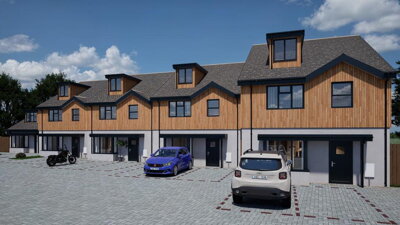
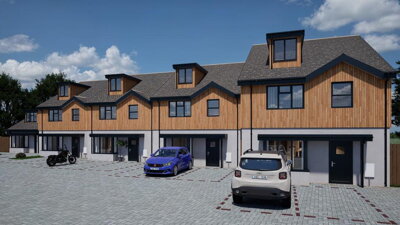
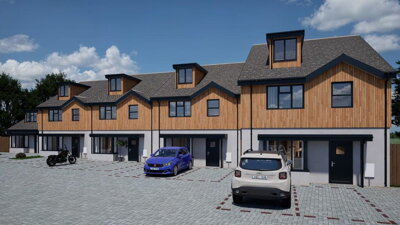
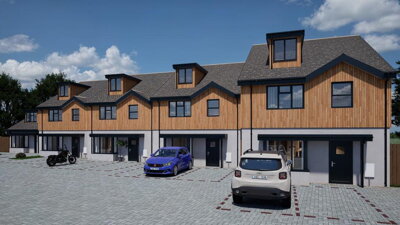
Browse 4 homes new builds in Leicester, England from local developer agents.
The larger property sector typically features multiple bathrooms, substantial reception space, and private gardens or off-street parking. Four bedroom houses in Leicester span detached, semi-detached, and occasionally terraced configurations, with styles ranging from period properties to modern executive homes.
£410k
177
14
126
Source: home.co.uk
Showing 177 results for 4 Bedroom Houses new builds in Leicester, England. 14 new listings added this week. The median asking price is £410,000.
Source: home.co.uk
Detached
87 listings
Avg £511,318
Semi-Detached
54 listings
Avg £401,931
Terraced
36 listings
Avg £302,499
Source: home.co.uk
Source: home.co.uk
Leicester’s housing market covers a lot of ground. In the current stock, semi-detached houses make up 30% of available homes, terraced properties account for 24%, and detached houses sit at 19%. Flats and apartments represent 17% of listings, with the remaining 10% spread across other categories. You can see the city’s shape in that mix, from Victorian industrial streets to the modern urban centre, where workers’ cottages stand near new-build schemes. Put simply, there is room here for someone after an affordable first home, or a household that needs extra space.
At present, the average asking price in Leicester is £278,339, and the median is £241,713. In Clarendon Park, St. Andrews, and Humberstone, terraced homes often fall between £200,000 and £260,000, which keeps them within reach for many people buying their first place. In Oadstone, Syston, and Groby, 3 and 4-bedroom family houses usually start at £272,000 and run up to £402,000. City centre apartments tell a different story. Around Highcross and the Cathedral Quarter, 1 and 2-bedroom flats are generally priced between £107,000 and £181,000.
New build schemes are still adding stock across Leicester, with larger developments at Meridian Business Park, Enderby, and in the Waterside regeneration zone. These homes often sit at the upper end of the market, and it is not hard to see why, modern specification, energy-efficient design, low-maintenance living. Investors keep watching Leicester as well, because rental yields in the centre can reach 5-7% depending on location and property type. St. Georges is still going through regeneration, and the planned improvements to the Leicester Railway Station approach should help central districts over the coming years.

One reason Leicester works for so many people is that each area feels distinct. The city centre is the place for apartments, restaurants, theatres, and nightlife within walking distance. Knighton and Stoneygate are quieter, with tree-lined streets, smaller shops, and close links to the University of Leicester campus, which is why academics and households with children often look there. Clarendon Park has its own pull too, especially around Queens Road, with vintage shops and a broad food scene. Prices can change sharply from one micro-market to the next, often on the strength of schools, transport, or how close a street sits to local facilities.
Leicester’s mix of communities shapes everyday life as much as the calendar. South Asian, Eastern European, African, and Caribbean backgrounds all have a clear presence here. Through the year, the city hosts the biggest Diwali celebrations outside India, the Caribbean Carnival, and the Leicester Comedy Festival. Belgrave Gate stands out for food, where authentic Indian curries sit alongside Polish pierogi, Somali dishes, and traditional British pubs. Then there is Belgrave Road. The Golden Mile is lined with some of the country’s best Indian restaurants and jewellery shops, and before Diwali the street is covered with thousands of lights.
There is no shortage of open space in Leicester. Victoria Park brings 70 acres close to the city centre, giving families, joggers, and anyone wanting a quieter hour somewhere to go. Abbey Park has Victorian landscaping beside the River Soar, plus a paddling pool, bowling greens, and the ruins of Leicester Abbey. The King Power Stadium still carries the memory of Leicester City Football Club’s 2016 Premier League victory. For indoor exercise, the LC2 leisure centre helps, as do gyms and swimming pools across the city. Aylestone Hall Gardens is another option, smaller, quieter, easy to miss if you do not know it is there.

Education is one of the reasons many households focus on Leicester. The city has 2 major universities, the University of Leicester, a research-intensive institution ranked among the top 30 UK universities, and De Montfort University, known for its arts, humanities, and law provision. That presence feeds a large student population and spills into public lectures, events, and shared facilities across the city. It also gives sixth form students access to campus facilities, widening participation programmes, and taster days through the year, which opens more routes into higher education for local learners.
Primary education is another area where Leicester compares well, with many Ofsted-rated Good and Outstanding schools across the city. Sacred Heart Catholic Primary School and St. Mary's Church of England Primary School serve the city centre and nearby streets. For suburban households, options includeibre School and Millgate School, both often noted for smaller classes and strong pastoral support. Swithland Primary School in the nearby village is also a solid option for anyone willing to live a little further out. Catchment rules matter, so we always suggest checking school boundaries early if a particular area is tied to a preferred primary.
Secondary schooling in Leicester includes comprehensives, academies, and grammar schools, with choices spread across the city and beyond it. Lancaster School, King's School, and Sir John Nelthorpe School are among the names people recognise most readily, helped by strong exam results and good Ofsted ratings year after year. For selective routes, Melton Mowbray and Loughborough are both within commuting distance of Leicester and each has grammar school options for determined students. Leicester College adds further education across vocational and academic subjects, and UCAS data points to strong university acceptance rates for students who stay local through secondary school.

Leicester is one of the more connected cities outside London. Leicester railway station has direct services to London St Pancras in around 70 minutes, with East Midlands Railway running frequent trains through the day. That keeps the capital workable for people in finance, law, or other London-based roles. Birmingham is about 45 minutes away by train, Nottingham around 20 minutes, and Sheffield roughly an hour. For anyone crossing the Midlands regularly, that matters.
By road, Leicester is well placed, though rush hour needs some thought. The city sits by the M1 on its eastern edge, linking it with London, Milton Keynes, Northampton, Sheffield, and Leeds. The A46 provides an orbital route around Leicester and then carries on towards Newark and Lincoln, which can be useful on longer trips when the M1 is not the best option. To the southwest, the M69 connects the city with Coventry and Birmingham. Traffic does build at peak times, especially on the ring road and the roads leading into the centre, so we recommend checking real journey times before committing to a move.
Local public transport is run through the Leicester City Bus Partnership, with First Leicester and other operators covering the city and nearby villages. Services connect Beaumont Leys, Hamilton, and Syston with jobs, shopping areas, and the railway station. Enderby and Birstall park and ride sites provide free parking and regular buses into the centre, which helps commuters dodge congestion charges in the city centre. Cycling has improved too. The Golden Boot cycle path links the city centre with major employment areas and the University of Leicester campus, making lower-carbon commuting realistic for people who live close enough to use it.

Before you start viewing, we suggest speaking with a mortgage broker so you know your borrowing capacity. In Leicester, most estate agents will ask for evidence of finance when an offer goes in, and an Agreement in Principle shows you are ready to proceed. It can also speed up the buying process. Leicester is well served by brokers who know local property values and can talk through the deals currently available.
Spend time comparing areas before you settle on one. Commute times matter, school catchments matter, nearby facilities matter too. Prices do not stay level across Leicester either. St. Matthews has more affordable terraces, while Oadstone leans towards executive homes, and the gap between the two can be substantial depending on street and property type.
Set up accounts with Homemove and local estate agents so alerts reach you as soon as suitable properties come on. Book viewings, then try to revisit at different times of day to get a feel for noise, traffic, and the immediate area. In Clarendon Park and Stoneygate, homes can move quickly. Registering with more than 1 agent gives you a better chance of catching the right one before it goes.
Once a property looks right, put in a formal offer through the estate agent. In Leicester, offers are usually made subject to surveys and contracts, so there is room to discuss price, fixtures, and fittings. You should also be ready to set out your chain position, or confirm that you are a cash buyer if that applies. In the busier parts of the market, having finance arranged early gives you more weight in negotiations.
We always recommend appointing a conveyancing solicitor to deal with the legal work, searches, and contracts. A RICS Level 2 or Level 3 survey is especially important for older homes, or for properties in areas known for flood risk. Your solicitor will work with the seller’s legal team and check the title register so the paperwork is in order. That matters more than people think.
After the surveys are satisfactory and the legal checks are done, both sides sign contracts and a 10% deposit is usually paid. Completion dates are then agreed. On the day itself, your solicitor transfers the balance and the keys are released. That is the point at which the Leicester home becomes yours.
There are a few practical checks in Leicester that deserve close attention. Flood risk is one of them, especially near the River Soar, around Causeway Lane, and in parts of the city centre and East Ward. The Environment Agency flood risk maps are worth checking, and it also makes sense to ask whether a property already has measures such as raised electrical sockets, waterproof storage, or flood barriers. Insurance can cost more in flood-risk zones, so we advise getting quotes before completion rather than afterwards.
Leasehold is common in Leicester, particularly for flats and apartments in the city centre and in some newer developments. Before going ahead, buyers should look carefully at the lease term, ground rent, and service charge obligations. Freehold houses are widely available and still widely preferred, but it is still worth checking that the title is registered and that no unusual covenants or easements affect the property. Older Victorian and Edwardian homes can come with historic restrictions, and those need proper legal review before purchase.
Planning rules are tighter in Leicester’s conservation areas, including Leicester Castle and New Walk. In these locations, permitted development rights can be limited, so extensions, loft conversions, and other substantial changes often need planning permission rather than falling within permitted development. Anyone thinking ahead to renovation should check the Leicester City Council planning portal and read the relevant conservation area designation with care. New developments can also carry estate covenants covering appearance, parking, and noise. Those points need to be clear before contracts are exchanged.

The average asking price in Leicester currently stands at £278,339, with the median at £241,713 according to our listing data. Prices vary a lot by property type and by area. Terraced houses average around £228,000, semi-detached properties sit between £305,000 and £310,000, and detached homes can reach £474,000 in suburbs such as Oadstone and Groby. In the city centre, apartments usually range from £130,000 for studio flats to £181,000 for larger 2-bedroom units in modern developments around Highcross. Over recent years, Leicester’s market has grown steadily, helped by employment, rail and road connections, and prices that remain lower than London and the Southeast.
Within the Leicester city boundary, Leicester City Council sets council tax bands from A through H based on property value. Most homes fall into bands A through D, with band A carrying the lowest annual charge and band F or H sitting higher up the scale. As a guide, band A is typically around £1,400 per year, while band D is approximately £1,900 annually, and the higher bands rise in step from there. Exact band details can be checked on the Leicester City Council website or through the Valuation Office Agency. Buyers should also bear in mind that newer developments and converted properties may still be waiting for band allocation, and reassessments can follow major improvements or alterations.
School choice is one of Leicester’s stronger points, with many Ofsted-rated Good and Outstanding primary and secondary schools across the city and nearby areas. At primary level, Sacred Heart Catholic Primary, St. Mary's Church of England Primary, andibre School are regularly mentioned by parents for academic standards and pastoral care. For secondary pupils, Lancaster School, King's School, and The Martin High School are often rated highly for exam performance and student welfare. Leicester Grammar School and its foundation schools provide a selective route for academically able students, with the school in Great Glen accessible to Leicester families. For higher education, the University of Leicester and De Montfort University mean students can continue into undergraduate and postgraduate study without moving away from family support networks.
Rail is one of Leicester’s practical strengths. Leicester railway station has direct trains to London St Pancras in approximately 70 minutes, Birmingham in 45 minutes, and Nottingham in 20 minutes. East Midlands Railway and CrossCountry run services through the day, so there is a steady choice for both work and leisure journeys. Inside the city, the Leicester City Bus Partnership coordinates broad bus coverage, with First Leicester operating major routes through residential and commercial districts including Beaumont Leys, Hamilton, Thurnby Lodge, and Syston. Enderby and Birstall park and ride together provide over 1,000 free parking spaces, plus regular buses into the city centre. By road, the M1 is close by, and Leicester sits approximately 100 miles from London.
Leicester is often considered by landlords because purchase prices are still relatively accessible and tenant demand is supported by the city’s universities and its wider job base. The University of Leicester and De Montfort University create a steady need for rental homes, especially in Clarendon Park, St. Andrews, and along the Golden Mile. For city centre apartments, rental yields typically range from 5% to 7%, and some student-heavy locations can produce more where multiple-bedroom properties are let to housemate groups at higher combined rents. Values have risen at a steady pace over recent years, backed by the East Midlands Freeport development and regeneration work such as the Waterside initiative. New landlords should also check licensing rules for Houses in Multiple Occupation where relevant, because Leicester City Council operates additional licensing schemes in certain areas to maintain rental standards.
Stamp Duty Land Tax rates for 2024-25 work like this. There is no SDLT on properties up to £250,000, which covers a large share of Leicester homes around the median price point. Between £250,000 and £925,000, the rate is 5% on the amount above £250,000, which applies to higher-value family houses in more expensive suburbs. Properties from £925,000 to £1.5 million incur 10% SDLT on the amount above £925,000, and 12% applies to any amount over £1.5 million. People buying their first home can claim relief on the first £425,000 of a purchase, with 5% charged between £425,000 and £625,000, and no relief available above £625,000. On a typical Leicester property at £241,713, a person buying their first home would pay no SDLT, and an additional purchaser would also pay nothing because the price sits below the standard threshold, which keeps upfront costs lower.
From 4.5% APR
Compare competitive mortgage deals from trusted lenders
From £499
Expert conveyancing solicitors to handle your legal work
From £350
Detailed inspection of accessible areas and condition report
From £500
Comprehensive building survey with detailed defect analysis
Working out the full cost of buying in Leicester matters just as much as choosing the property itself. The main upfront tax is Stamp Duty Land Tax, and it applies to purchases above £250,000. At the median Leicester price of £241,713, most buyers currently pay no SDLT, which can mean a noticeable saving against London or the Southeast. Above that level, the 5% rate applies between £250,000 and £925,000. For more expensive homes, the rate moves to 10%.
For people buying their first home, the rules are more generous. Properties up to £425,000 carry no SDLT, which helps in Leicester’s comparatively affordable market. From £425,000 to £625,000, the charge is 5% on the amount above £425,000, so a £500,000 purchase would be taxed on £75,000 at 5%, giving an SDLT bill of £3,750. That can cut the upfront cost by thousands against the standard rates. Buyers still need to meet the eligibility rules, including residency requirements and purchase type restrictions, because mistakes can lead to penalties and interest from HMRC.
SDLT is only part of the budget. Solicitor conveyancing fees usually fall between £500 and £1,500, depending on the complexity of the transaction, and leasehold purchases or homes with planning conditions can push the work up. A RICS Level 2 survey starts from £350 for standard properties. For Victorian or Edwardian houses in Leicester’s older districts, a Level 3 building survey begins from £500 and gives a fuller view of defects, which can be crucial with period stock. Mortgage arrangement fees vary by lender from free to around £2,000, so they need to be included in comparisons. Search fees, title register fees, and electronic transfer charges add another £300 to £500. Then there is the move itself, with local Leicester removals typically costing £300 to £800 depending on property size and distance, while longer moves from elsewhere in the country will cost more.

Properties New Builds In London

Properties New Builds In Plymouth

Properties New Builds In Liverpool

Properties New Builds In Glasgow

Properties New Builds In Sheffield

Properties New Builds In Edinburgh

Properties New Builds In Coventry

Properties New Builds In Bradford

Properties New Builds In Manchester

Properties New Builds In Birmingham

Properties New Builds In Bristol

Properties New Builds In Oxford

Properties New Builds In Leicester

Properties New Builds In Newcastle

Properties New Builds In Leeds

Properties New Builds In Southampton

Properties New Builds In Cardiff

Properties New Builds In Nottingham

Properties New Builds In Norwich

Properties New Builds In Brighton

Properties New Builds In Derby

Properties New Builds In Portsmouth

Properties New Builds In Northampton

Properties New Builds In Milton Keynes

Properties New Builds In Bournemouth

Properties New Builds In Bolton

Properties New Builds In Swansea

Properties New Builds In Swindon

Properties New Builds In Peterborough

Properties New Builds In Wolverhampton

Enter your details to see if this property is within your budget.
Loans, cards, car finance
Estimated property budget
Borrowing + deposit
You could borrow between
Typical borrowing
Monthly repayment
Est. at 4.5%
Loan-to-value
This is an estimate only. Your actual budget may vary depending on interest rates, credit history, and personal circumstances. For an accurate affordability assessment, speak to one of our free mortgage advisors.
This calculator provides estimates for illustrative purposes only and does not constitute financial advice. Your home may be repossessed if you do not keep up repayments on your mortgage. Estimates based on 4.5% interest rate, repayment mortgage. Actual rates depend on your circumstances.
Homemove is a trading name of HM Haus Group Ltd (Company No. 13873779, registered in England & Wales). Homemove Mortgages Ltd (Company No. 15947693) is an Appointed Representative of TMG Direct Limited, trading as TMG Mortgage Network, which is authorised and regulated by the Financial Conduct Authority (FRN 786245). Homemove Mortgages Ltd is entered on the FCA Register as an Appointed Representative (FRN 1022429). You can check registrations at NewRegister or by calling 0800 111 6768.

We use cookies to show you personalised content and improve your experience of our website. Find out more in our Privacy policy and Cookie policy.